
VIP-Mitglied

Intelligente visuelle Prüfgeräte für Industrieteile
Intelligente visuelle Prüfgeräte für Industrieteile
Produktdetails
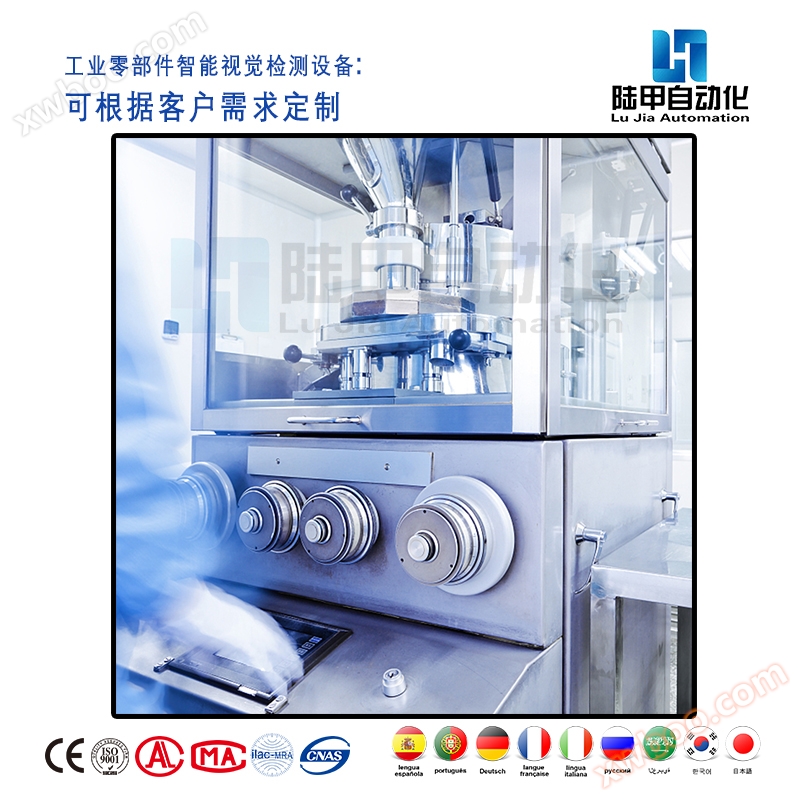
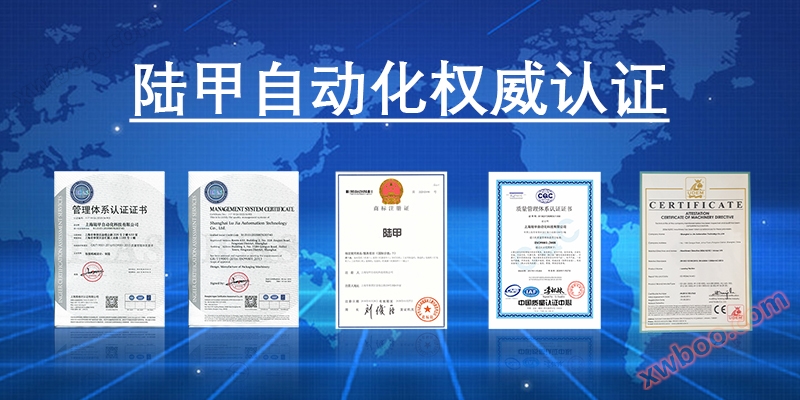
Intelligente visuelle Prüfgeräte für Industrieteile
Als in- und ausländisches bekanntes Unternehmen für intelligente Verpackungsautomatisierungsgeräte,Shanghai Panzer Automation Technologie Co., Ltd.Der technische Service bietet der chinesischen Fertigungsindustrie technologische Lösungen für intelligente visuelle Prüfgeräte mit internationalen synchronisierten industriellen Komponenten. Intelligente visuelle Prüfgeräte für IndustrieteileAnwendung aufPharma, Lebensmittel, Getränke, Chemie, Gesundheitsprodukte, Elektronik, Elektrogeräte, Chemie, Automobilindustrie und Kunststoffe und Hardware!
Intelligente visuelle Inspektion von IndustrieteilenAusrüstunginDigitale Bildverarbeitung ist eine aufstrebende TechnologiebrancheAnwendungen in den Bereichen Automatisierungssysteme, Automobilteilprüfung und intelligente Erkennung. Es ist zu einer der wichtigsten Lösungen für traditionelle manuelle, langsame und ineffiziente Prüfungen geworden. Da industrielle Teile in der tatsächlichen Produktion viele Mängel im Detail haben, ist es notwendig, die richtigen Algorithmen zu wählen, um sie genau zu identifizieren und zu prüfen. Dieser Artikel bezieht sich auf die Rückplattenteile der Automobil-Absorptionsboxen, entwirft das Gesamtprogramm des Bilderkennungssystems, baut eine experimentelle Hardwareplattform auf und erläutert die Zusammensetzung der verschiedenen Geräte und Beleuchtungssysteme, die vom Visionssystem verwendet werden, und kalibriert das Kamerasystem, um die Korrektur des Verzerrungseffektes abzuschließen. Nachdem das korrigierte Bild erhalten wurde, wurden Schlüsseltechnologien wie die Vorbearbeitung des Bildes, die Randerkennung und die Messung der geometrischen Parameter der Teile geforscht. Bei der Vorverarbeitung wurde zunächst die Rauschkategorie des Bildes analysiert, mehrere Filteralgorithmen verglichen, um den Filteralgorithmus zu finden, der für dieses Bild geeignet ist. Darüber hinaus wird bei der Bildranderkennung der klassische Randerkennungsalgorithmus verglichen, der die Grundlage für die spätere Extraktion von Merkmalen bildet. Bei der Erkennung der grundlegenden Merkmale des Bildes werden Kreise und gerade Linien im Bild jeweils erkannt und die Parameter der Erkennungsergebnisse optimiert, um die Erkennungswirkung von Kreisen und geraden Linien zu verbessern. Bei der Erkennung von Slots in Bildern wurde ein Algorithmus zur Vorlagenausstimmung verwendet, um die Position der Slots genau zu identifizieren. Nach der Prüfung der Teilegröße wurde auch die Klassifizierungsmethode für intakte Teile, Schweißpunktteile und Kratzerteile untersucht. Zunächst durch die Randerkennung, um die klare und vollständige Grundlage der Bildrande zu gewährleisten, verwendet man einen Gradientenrichtungs-Histogramm-Algorithmus für die Extraktion von Merkmalen und verwendet wahrscheinliches neuronales Netzwerk und SVM für die Klassifizierung, um gute Klassifizierungseffekte zu erzielen. Allerdings sind die Merkmale Vektor Dimensionen sind höher, und die Merkmale extrahieren Informationen überlagert, so dass es schwierig ist, die wichtigen Bildinformationen voll zu nutzen. Im Text wurde der Gradientenrichtungshistostogramm-Algorithmus verbessert, der Gradientenrichtungshistostogramm-Charakteristikextraktionsalgorithmus wurde durch eine bilineare Interpretation interpeliert, um den Charakteristikenvektor zu erhalten, der die detaillierten Charakteristiken widerspiegelt, und dann mit dem neuronalen Netzwerk und der Unterstützung von Vektormaschinen erkannt wird, während der Anti-Mischung-Effekt der Charakteristikenwerte verbessert wird, verbessert sich auch die Genauigkeit der Klassifizierungserkennung des Bildes. Die Implementierung dieses Moduls basiert auf Visual C++ und MATLAB, einschließlich der Entwicklung von Schnittstellen für visuelle Systeme und des Schreibens von Algorithmen. Dieser Artikel implementiert die Ermittlung der Teile Eigenschaften, mit verschiedenen Arten von Teilen Klassifizierung zu identifizieren. Die Ergebnisse des Artikels spiegeln einen gewissen technischen Wert wider und bieten gleichzeitig eine gewisse Lehre für die Anwendung von Bildmesstechniken und die Klassifizierung von Teilen.
Intelligent visual inspection equipment
As a well-known packaging intelligent automation equipment research and development enterprise at home and abroad, Shanghai Lujia Automation Technology Co., Ltd. provides technical solutions for the Chinese manufacturing industry to synchronize intelligent visual inspection equipment for industrial parts. Widely used in: pharmaceutical, food, beverage, daily chemical, health care products, electronics, electrical appliances, chemicals, automotive industry and plastics and hardware industries!
Intelligent visual inspection equipment for industrial components is an emerging technology industry in digital image processing technology. It has been widely used in automation systems, automotive parts inspection and intelligent identification. It has become one of the important solutions for slow manual detection and low detection efficiency. Due to the defects in the details of industrial parts in actual production, it is necessary to use an appropriate algorithm to accurately identify and detect them. In this paper, the overall scheme of the image detection system is designed for the back part of the car energy-absorbing box. The experimental hardware platform is built, and the components of the various components and lighting systems used in the vision system are introduced in detail. Then the camera system is calibrated and completed. Correction of distortion effects. After obtaining the corrected image, key technologies such as image preprocessing, edge detection and part geometric parameter measurement were studied. In the preprocessing, the noise class of the image is first analyzed, and various filtering algorithms are compared to find the filtering algorithm suitable for the image. Furthermore, in the image edge detection, the classic edge detection algorithm is compared, which provides the basis for the subsequent feature extraction. When detecting the basic features of the image, the circles and lines in the image are detected separately, and the parameters of the detection result are optimized to improve the detection effect of the circle and the line. When detecting the slot in the image, a template matching algorithm is used to accurately identify the position of the slot. After the inspection of the part size, the classification and identification methods of the intact parts, the solder joint parts and the scratch parts were also studied. Firstly, through the edge detection, on the basis of ensuring the image edge is clear and complete, the gradient direction histogram algorithm is used for feature extraction, and the probabilistic neural network and SVM are used for classification and recognition, and a good classification effect is obtained. However, the feature vector dimension is high, and the feature extraction information is aliased, so that the key information of the image is difficult to fully utilize. In this paper, the gradient direction histogram algorithm is improved, and the gradient direction histogram feature extraction algorithm is bilinearly interpolated. The feature vector which can reflect the detailed features is obtained, and then the neural network and support vector machine are used for recognition. The anti-aliasing effect of the value also improves the accuracy of classification and recognition of images. The implementation of all modules of this topic is based on Visual C++ and MATLAB, including visual system interface development and algorithm writing. This paper realizes the detection of part features and the classification and identification of different types of parts. The research results in this paper reflect a certain engineering value, and provide some reference for the application of image measurement technology and the classification and identification of parts.
Online-Anfrage
-
Kontakte
-
Unternehmen
-
Telefon
-
E-Mail
-
WeChat
-
Prüfcode
-
Nachrichteninhalt
-